
The I Ching:
A Modern
Guide
to Ancient Wisdom
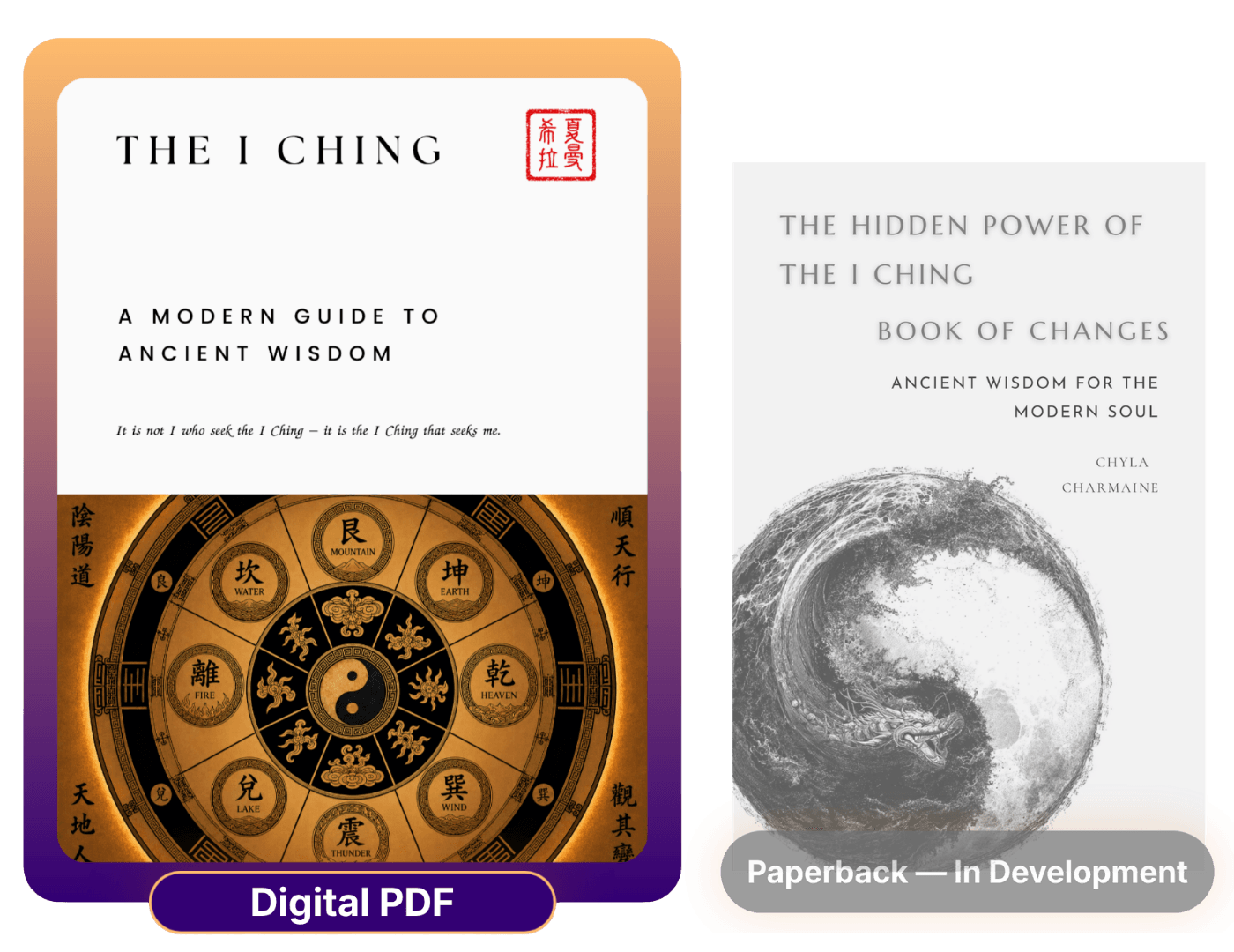
320 pages. 64 hexagrams.
A modern guide to understanding change, patterns, decisions, and the forces moving through your life.
The Language of the
I Ching
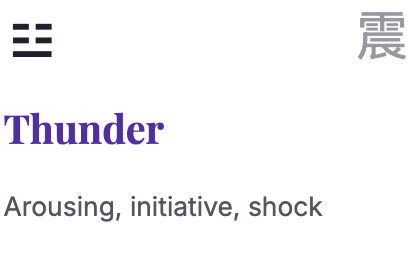
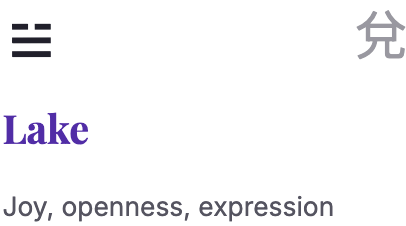
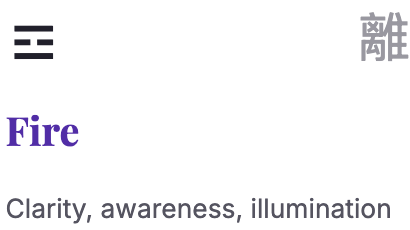
The I Ching is built around eight elemental forces found both in nature and human experience:
Thunder, Lake, Fire, Water, Mountain, Earth, Heaven, Wind.
These aren't just physical elements — they represent recurring patterns of movement, emotion, tension, stillness, change, and growth.
When you do a reading, you receive a hexagram — a six-line symbol made of two trigrams stacked together. Each trigram carries the energy of one of these eight forces. The combination tells a story about what's moving through your situation right now.
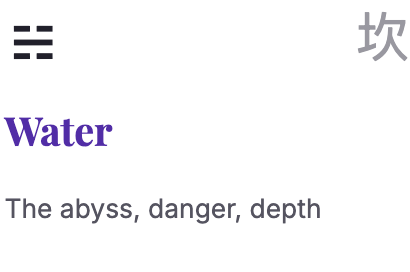
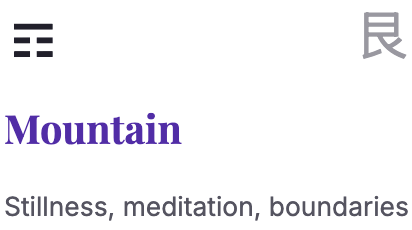
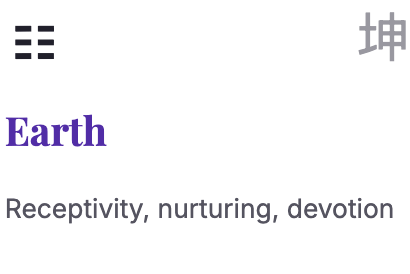
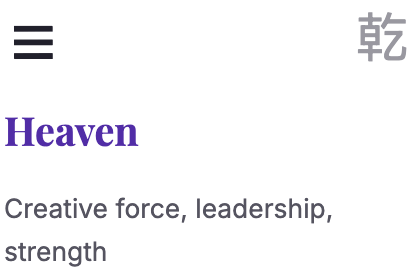
From Trigrams to Hexagrams
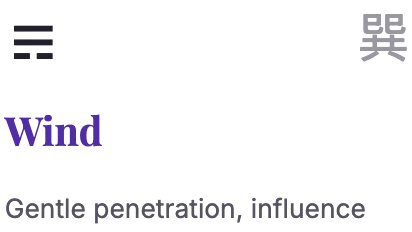
A trigram is made of three lines — broken (yin) or unbroken (yang). Each combination represents one of the eight elemental forces above.
A hexagram is six lines — created by stacking two trigrams together. The combination forms a symbolic pattern — a mirror for a particular human experience, challenge, or transformation.
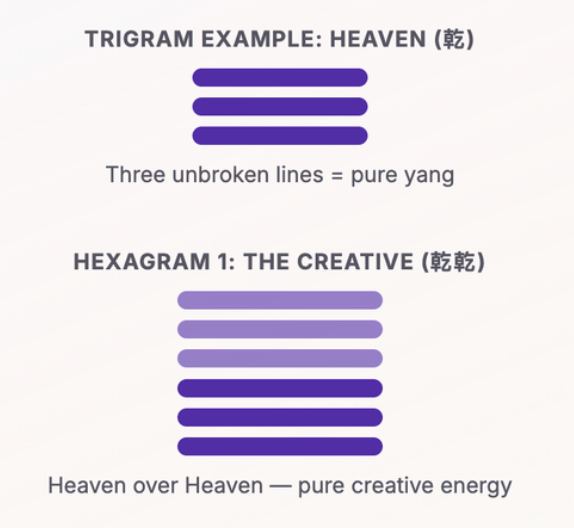
64 possible combinations.
64 recurring patterns of life.
How to Consult the I Ching
The book includes complete divination instructions.
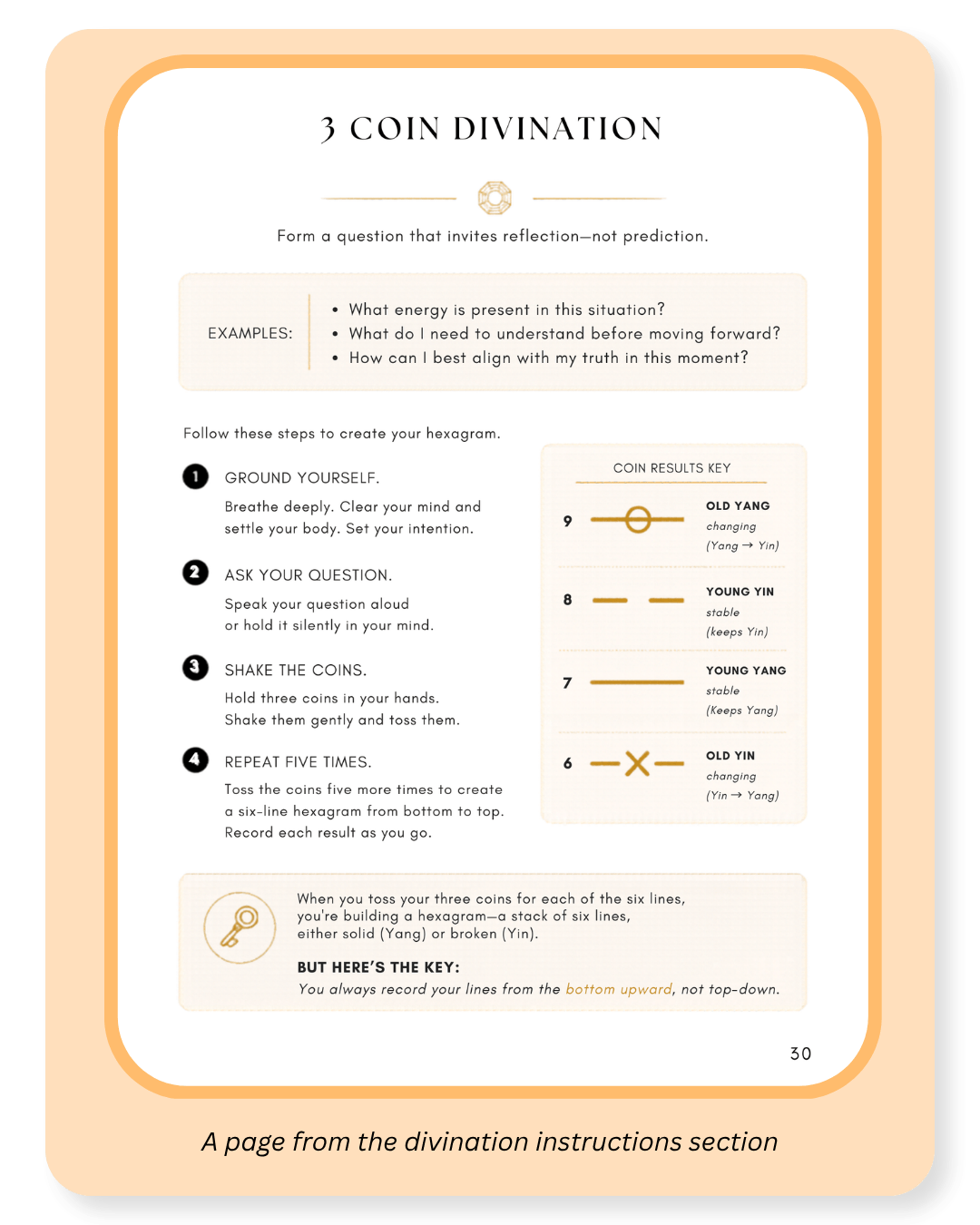
All you need are three coins (any coins — the method works with whatever you have) and a question you're genuinely sitting with.
Changing lines are what make the I Ching dynamic.
When you throw a 6 or a 9, that line is "in motion" — it transforms your hexagram into a second one, showing you where your situation is heading.
The book explains all 6 changing lines for every hexagram.
The I Ching:
A Modern Guide
to Ancient Wisdom
320 pages. 64 hexagrams.
A modern guide to understanding change, patterns, decisions, and the forces moving through your life.
The Language of the I Ching
The I Ching is built around eight elemental forces found both in nature and human experience:
Thunder, Lake, Fire, Water, Mountain, Earth, Heaven, Wind.
These aren't just physical elements — they represent recurring patterns of movement, emotion, tension, stillness, change, and growth.
When you do a reading, you receive a hexagram — a six-line symbol made of two trigrams stacked together. Each trigram carries the energy of one of these eight forces. The combination tells a story about what's moving through your situation right now.
From Trigrams to Hexagrams
A trigram is made of three lines — broken (yin) or unbroken (yang). Each combination represents one of the eight elemental forces above.
A hexagram is six lines — created by stacking two trigrams together. The combination forms a symbolic pattern — a mirror for a particular human experience, challenge, or transformation.
64 possible combinations.
64 recurring patterns of life.
How to Consult the I Ching
The book includes complete divination instructions.
All you need are three coins (any coins — the method works with whatever you have) and a question you're genuinely sitting with.
Changing lines are what make the I Ching dynamic.
When you throw a 6 or a 9, that line is "in motion" — it transforms your hexagram into a second one, showing you where your situation is heading.
The book explains all 6 changing lines for every hexagram.
The I Ching:
A Modern Guide
to Ancient Wisdom
320 pages. 64 hexagrams.
A modern guide to understanding change, patterns, decisions, and the forces moving through your life.
The Language of the I Ching
The I Ching is built around eight elemental forces found both in nature and human experience:
Thunder, Lake, Fire, Water, Mountain, Earth, Heaven, Wind.
These aren't just physical elements — they represent recurring patterns of movement, emotion, tension, stillness, change, and growth.
When you do a reading, you receive a hexagram — a six-line symbol made of two trigrams stacked together. Each trigram carries the energy of one of these eight forces. The combination tells a story about what's moving through your situation right now.
From Trigrams to Hexagrams
A trigram is made of three lines — broken (yin) or unbroken (yang). Each combination represents one of the eight elemental forces above.
A hexagram is six lines — created by stacking two trigrams together. The combination forms a symbolic pattern — a mirror for a particular human experience, challenge, or transformation.
64 possible combinations.
64 recurring patterns of life.
How to Consult the I Ching
The book includes complete divination instructions.
All you need are three coins (any coins — the method works with whatever you have) and a question you're genuinely sitting with.
Changing lines are what make the I Ching dynamic.
When you throw a 6 or a 9, that line is "in motion" — it transforms your hexagram into a second one, showing you where your situation is heading.
The book explains all 6 changing lines for every hexagram.
Form your question
Not yes/no. Something you're genuinely reflecting on.
'What do I need to understand about this situation?'
Toss three coins, six times
Each toss creates one line of your hexagram.
The coin values will determine each line type.
Build your hexagram from bottom to top
Six lines, each either yin (broken) or yang (unbroken).
Some lines are 'changing' — these carry extra significance.
Read your hexagram
Look up your hexagram in the book.
Read the themes, modern meaning, and reflection prompts.
If you have changing lines, read those too.

Reflect and journal
Use the reflection questions to connect the reading to your actual life.
The I Ching speaks in patterns — your job is to notice where they land.
Inside a Hexagram
Each hexagram unfolds across 4 pages.
Below is the opening page of Hexagram 1 —
The Creative (乾) — as an example of the depth and structure included in every entry.
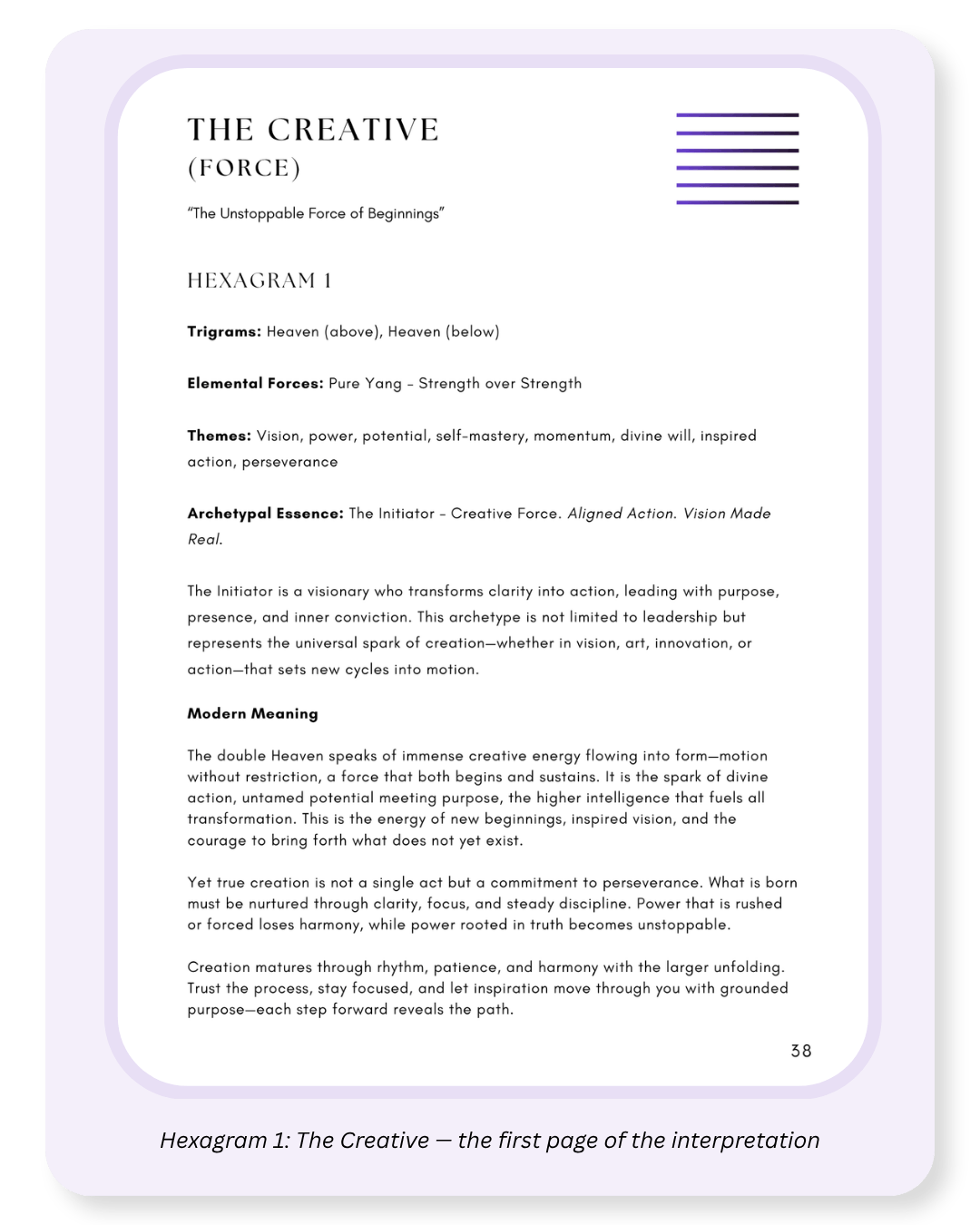
Every Hexagram Includes:
Traditional Title & Chinese Characters
The original name preserved alongside its modern interpretation
Themes & Archetypal Essence
The core pattern this hexagram represents in human experience
Modern Meaning (Coaching Lens)
What this hexagram means for your life right now, in plain language
Elemental Insight
How the natural forces in this hexagram relate to your situation
What It Means to Receive This Hexagram
Guidance for when this specific pattern shows up in your reading
Reflection Prompts & Affirmation
Questions to sit with and an affirmation to anchor the insight
All 6 Changing Lines
Each line explained with classical source material and modern coaching interpretation
Summary
A concise overview to return to for quick reference
What
You'll Learn
The book is structured in three parts — from foundation to mastery to daily integration.
Foundation
Learn the Language
Everything you need to start using it immediately — history, how to read symbols, 3-coin divination method, the 8 trigrams and changing lines explained.
64 Hexagrams
The complete system
64 mirrors for understanding change, tension, growth, relationships, identity, and the patterns moving through your life.
Daily Practice
Bring it to life
Journalling with the I Ching, embodying the trigrams, hexagrams for ritual, integrating elemental insights into your daily life. Not just reading — living it.
For the Skeptics
If you're reading this with a raised eyebrow — good.
Healthy skepticism is welcome here.
The I Ching doesn't ask you to believe in anything supernatural.
Here's what's actually happening when you use it:
Jung's Synchronicity Principle
Carl Jung formulated the idea of synchronicity — or “meaningful coincidence” — and discussed it in his 1952 work Synchronicity: An Acausal Connecting Principle. He often referred to the I Ching as a key example of how symbolic events can feel meaningfully linked rather than causally connected.
Whether or not you accept synchronicity as a mechanism, Jung’s clinical observations led him to see the I Ching as a powerful symbolic tool for reflection and interpretation.
Pattern Recognition, Not Prediction
The I Ching presents 64 symbolic patterns that can be read as recurring human situations — growth, conflict, retreat, breakthrough, and more. When you receive a hexagram, it isn’t telling you the future; it’s offering a pattern you can reflect on in relation to your current situation.
Cognitive psychology confirms that humans are highly skilled pattern-recognisers. The I Ching gives your pattern-seeking mind a structured symbolic language to work with.
The Psychology of Reflective Practice
Research consistently shows that structured reflective practices — journalling, symbolic inquiry, guided self-questioning — reduce anxiety, increase self-awareness, and improve decision-making. The I Ching is, at its most basic, a structured reflective practice with 3,000 years of refinement.
A 2022 NIH meta-analysis found that journaling interventions produced a statistically significant 5% reduction in mental health symptom scores. The I Ching adds symbolic depth to this same reflective mechanism.
The Honest Framing
You don't need to believe the I Ching is "magic" for it to work. Here's what's actually happening:
1. You pause and form a genuine question (this alone interrupts overthinking)
2. You perform a simple ritual (coin tossing) that shifts you from analytical to receptive mode
3. You receive a symbolic response that bypasses your usual mental loops
4. You interpret that symbol through the lens of your own situation (this is where insight lives)
5. You journal and reflect — integrating what you've noticed
Whether the "right" hexagram appears through synchronicity, randomness, or your own unconscious projection — the reflective process works either way. That's what makes it useful regardless of your metaphysical beliefs.
Form your question
Not yes/no.
Something you're genuinely reflecting on.
'What do I need to understand about this situation?'
Toss three coins, six times
Each toss creates one line of your hexagram.
The coin values will determine each line type.
Build your hexagram from bottom to top
Six lines, each either yin (broken) or yang (unbroken).
Some lines are 'changing' — these carry extra significance.
Read your hexagram
Look up your hexagram in the book.
Read the themes, modern meaning, and reflection prompts.
If you have changing lines, read those too.
Reflect and journal
Use the reflection questions to connect the reading to your actual life.
The I Ching speaks in patterns — your job is to notice where they land.
Inside a Hexagram
Each hexagram unfolds across 4 pages.
Below is the opening page of Hexagram —
The Creative (乾) — as an example of the depth and structure included in every entry.
Every Hexagram Includes:
Traditional Title & Chinese Characters
The original name preserved alongside its modern interpretation
Themes & Archetypal Essence
The core pattern this hexagram represents in human experience
Modern Meaning (Coaching Lens)
What this hexagram means for your life right now, in plain language
Elemental Insight
How the natural forces in this hexagram relate to your situation
What It Means to Receive This Hexagram
Guidance for when this specific pattern shows up in your reading
Reflection Prompts & Affirmation
Questions to sit with and an affirmation to anchor the insight
All 6 Changing Lines
Each line explained with classical source material and modern coaching interpretation
Summary
A concise overview to return to for quick reference
What
You'll Learn
The book is structured in three parts from foundation to mastery to daily integration.
Foundation
Learn the Language
Everything you need to start using it immediately — history, how to read symbols, 3-coin divination method, the 8 trigrams and changing lines explained.
64 Hexagrams
The complete system
64 mirrors for understanding change, tension, growth, relationships, identity, and the patterns moving through your life.
Daily Practice
Bring it to life
Journalling with the I Ching, embodying the trigrams, hexagrams for ritual, integrating elemental insights into your daily life. Not just reading — living it.
For the Skeptics
If you're reading this with a raised eyebrow — good.
Healthy skepticism is welcome here.
The I Ching doesn't ask you to believe in anything supernatural.
Here's what's actually happening when you use it:
Jung's Synchronicity Principle
Carl Jung formulated the idea of synchronicity — or “meaningful coincidence” — and discussed it in his 1952 work Synchronicity: An Acausal Connecting Principle. He often referred to the I Ching as a key example of how symbolic events can feel meaningfully linked rather than causally connected.
Whether or not you accept synchronicity as a mechanism, Jung’s clinical observations led him to see the I Ching as a powerful symbolic tool for reflection and interpretation.
Pattern Recognition, Not Prediction
The I Ching presents 64 symbolic patterns that can be read as recurring human situations — growth, conflict, retreat, breakthrough, and more. When you receive a hexagram, it isn’t telling you the future; it’s offering a pattern you can reflect on in relation to your current situation.
Cognitive psychology confirms that humans are highly skilled pattern-recognisers. The I Ching gives your pattern-seeking mind a structured symbolic language to work with.
The Psychology of Reflective Practice
Research consistently shows that structured reflective practices — journalling, symbolic inquiry, guided self-questioning — reduce anxiety, increase self-awareness, and improve decision-making. The I Ching is, at its most basic, a structured reflective practice with 3,000 years of refinement.
A 2022 NIH meta-analysis found that journaling interventions produced a statistically significant 5% reduction in mental health symptom scores. The I Ching adds symbolic depth to this same reflective mechanism.
The Honest Framing
You don't need to believe the I Ching is "magic" for it to work.
Here's what's actually happening:
1. You pause and form a genuine question (this alone interrupts overthinking)
2. You perform a simple ritual (coin tossing) that shifts you from analytical to receptive mode
3. You receive a symbolic response that bypasses your usual mental loops
4. You interpret that symbol through the lens of your own situation (this is where insight lives)
5. You journal and reflect — integrating what you've noticed
Whether the "right" hexagram appears through synchronicity, randomness, or your own unconscious projection — the reflective process works either way. That's what makes it useful regardless of your metaphysical beliefs.
How This Book Was Made
The process: with the help of ChatGPT, the oldest, most traditional I Ching texts — including the Mawangdui manuscripts, Zhou dynasty core text, and Song dynasty commentaries — were combined with Richard Wilhelm's acclaimed 1920s translation (forwarded by Carl Jung).
Then a modern coaching version was created, preserving the depth of the original while making it genuinely accessible to a Western reader.
Technology Behind this Book
The interpretations were modernised with the assistance of AI (ChatGPT), but the vision, intention, framework, source selection, and refinement were deeply human.
Ancient wisdom is the foundation. Human insight shaped the structure.
AI helped translate and organise the material into a more accessible modern experience.
The result is something that blends historical depth with modern clarity.
Questions About the Book
Any three coins will work — they just need to have two distinct sides (heads and tails).
Many people use Chinese coins for the aesthetic, but regular coins from your pocket work perfectly.
None at all. Part One teaches you everything from scratch.
It was specifically designed for Western readers who are new to this. If you've tried traditional I Ching books and found them challenging, this is the version you'll find easier.
Currently only available as a PDF.
A paperback edition is in development and will be available within the next year.
When you toss your coins and get a total of 6 or 9, that line is "changing" — it's in motion.
This creates a second hexagram that shows where your situation is moving toward.
No. The I Ching is reflective divination — not predictive fortune-telling.
It doesn't tell you what will happen. It reflects what's already present — the energies, tensions, and patterns moving through your situation. Think of it as asking a very wise, very old mirror what it sees.
Partly. ChatGPT was used as a writing and editing tool, just as many authors use editors, designers, and research assistants.
The vision, framework, and overall direction of the book were created and curated by Chyla Charmaine over more than a year of development.
Most I Ching books are either academic translations or oversimplified "oracle card" versions that lose the depth.
This version preserves the classical source material while adding modern coaching interpretations, reflection questions, and practical integration.
It's the I Ching made usable — without dumbing it down. Plus changing lines are explained and Part Three shows you how to actually live with it.
The Book
PDF — 320 pages
$19
USD
Complete I Ching guide
(64 hexagrams)
Modern coaching interpretations
3-coin divination instructions
Reflection prompts & affirmations
Daily practice integration guide
Instant PDF delivery
Jing

Community
AI Companion + Community
$111
USD
The complete book, delivered instantly (PDF)
Learn how to confidently do your own I Ching readings
Ongoing guidance so you're never doing it alone
Access Jing for real-time support, clarity and interpretation
Reflective conversations to help you understand your patterns
Three coins.
One question.
How This Book Was Made
The process: with the help of ChatGPT, the oldest, most traditional I Ching texts — including the Mawangdui manuscripts, Zhou dynasty core text, and Song dynasty commentaries — were combined with Richard Wilhelm's acclaimed 1920s translation (forwarded by Carl Jung).
Then a modern coaching version was created, preserving the depth of the original while making it genuinely accessible to a Western reader.
Technology Behind this Book
The interpretations were modernised with the assistance of AI (ChatGPT), but the vision, intention, framework, source selection, and refinement were deeply human.
Ancient wisdom is the foundation. Human insight shaped the structure.
AI helped translate and organise the material into a more accessible modern experience.
The result is something that blends historical depth with modern clarity.
Questions About
the Book
Any three coins will work — they just need to have two distinct sides (heads and tails).
Many people use Chinese coins for the aesthetic, but regular coins from your pocket work perfectly.
None at all. Part One teaches you everything from scratch.
It was specifically designed for Western readers who are new to this. If you've tried traditional I Ching books and found them challenging, this is the version you'll find easier.
Currently only available as a digital PDF download.
A paperback edition is in development and will be available within the next year.
When you toss your coins and get a total of 6 or 9, that line is "changing" — it's in motion.
This creates a second hexagram that shows where your situation is moving toward.
No. The I Ching is reflective divination — not predictive fortune-telling.
It doesn't tell you what will happen. It reflects what's already present — the energies, tensions, and patterns moving through your situation. Think of it as asking a very wise, very old mirror what it sees.
Partly. ChatGPT was used as a writing and editing tool, just as many authors use editors, designers, and research assistants.
The vision, framework, and overall direction of the book were created and curated by Chyla Charmaine over more than a year of development.
Most I Ching books are either academic translations or oversimplified "oracle card" versions that lose the depth.
This version preserves the classical source material while adding modern coaching interpretations, reflection questions, and practical integration.
It's the I Ching made usable — without dumbing it down. Plus changing lines are explained and Part Three shows you how to actually live with it.
The Book
Digital PDF — 320 pages
$19
USD
Complete I Ching guide
(64 hexagrams)
Modern coaching interpretations
3-coin divination instructions
Reflection prompts & affirmations
Daily practice integration guide
Instant PDF delivery
Jing
Community
AI Companion + Community
$111
USD
The complete book, delivered instantly (PDF)
Learn how to confidently do your own I Ching readings
Ongoing guidance so you're never doing it alone
Access Jing for real-time support, clarity and interpretation
Reflective conversations to help you understand your patterns
Three coins.
One question.
Built with systeme.io | Privacy policy | Legal | Terms and conditions